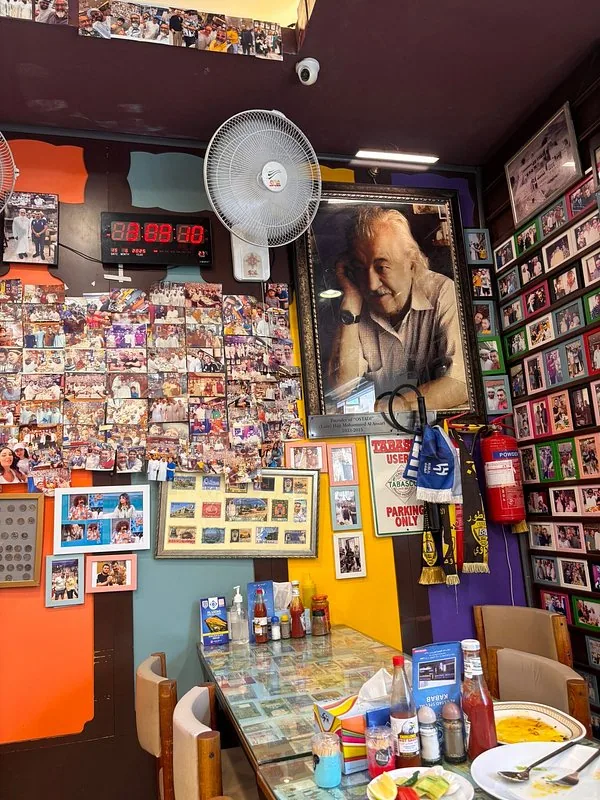
In 1941, a ten-year-old Iranian boy named Mohammad Ali Ansari stepped off a boat in Dubai. He had come from Gerash — a small town in the south of Iran where the desert meets the Gulf — to a city that, at the time, had no high-rise, no airport, and barely a road. His family had decided he would try his luck on the Trucial Coast.
For the next thirty-five years he did, with limited success. He sold bread. He sold perfume. He sold matchboxes door to door. He ran a money-exchange business. None of it lasted. By the mid-1970s he was approaching fifty, with very little to show for it.
The AED 100,000 loan that opened a six-table room.
In 1978 he borrowed AED 100,000 — a serious sum for a man who had failed at four trades — and opened a kebab shop on Al Mankhool Road in Bur Dubai. He called it Kebab Khas: "Special Kebab." Six tables. A single sink. A charcoal grill. A menu that fit on one laminated sheet.
It was not a marketing exercise. It was the last thing he could try.
"For thirty-five years he tried bread, perfume, matchboxes. The kebab shop was the last roll of the dice."— from a Dokanway profile of the Ansari family
A decade of word of mouth.
Nothing happened quickly. There was no advertising. There was no Time Out review. There was a man in his fifties, a grill, and a queue that took roughly ten years to materialise. When it did, it never stopped: by the late 1980s, taxi drivers were telling tourists about it; by the 1990s, footballers were turning up unannounced; by the 2000s, the queue out the door was a feature, not a problem.
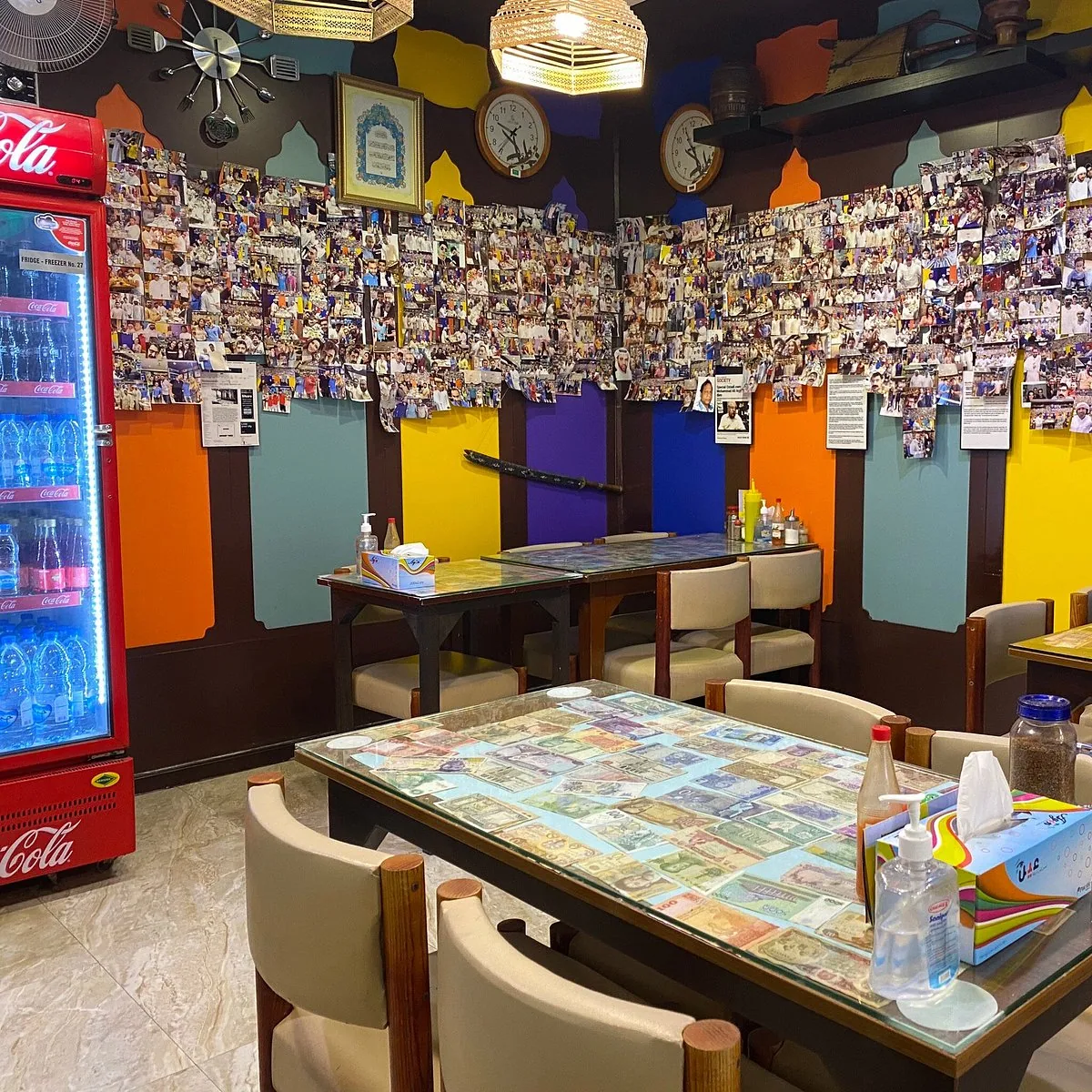
What grew alongside the line, slowly, was the wall. Customers — strangers and celebrities — left signed photographs. Mr Ansari hung them all. Currency notes from every country got pressed under the glass of the tables. Wall clocks were set to different time zones. A vintage telephone went up by the door. Today there are an estimated 8,000 photographs in the room.
The sons take the grill.
Mr Ansari died in 2015, at the restaurant he had spent thirty-seven years building. His three sons — Majeed, Abbas and Taleb Ansari — took over. They had grown up in the room. They had washed the dishes, taken the orders, watched the wall fill.
One thing they kept from their father: no branches. There would be no second location in Marina, no franchise in JBR, no airport kiosk. The reasons were practical and stubborn. Practical because his recipes are his recipes; stubborn because he had said so.
Surviving ninety-five percent losses.
During the pandemic, the restaurant reported losses of nearly 95% — a number that, for any restaurant, ought to be terminal, and that for one with six tables and no delivery infrastructure was meant to be. It wasn't. The family did what they had done in the seventies: kept the kitchen open, kept the recipes the same, waited for the room to fill again. It did.
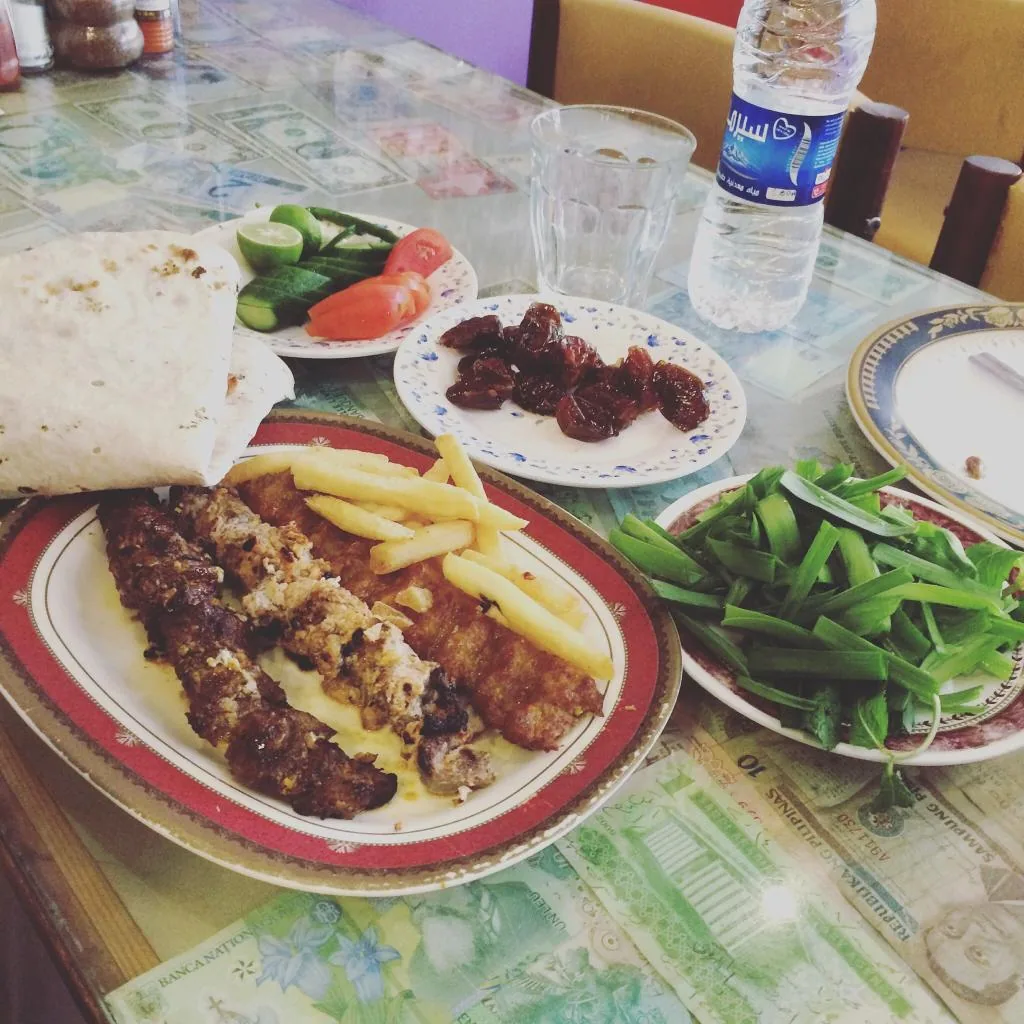
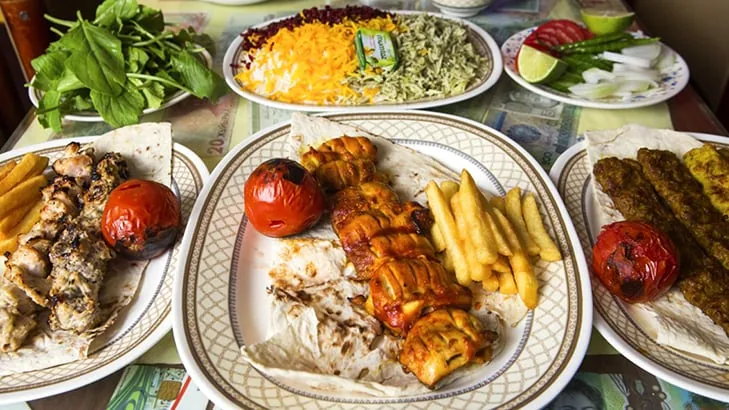
Today the restaurant is on a Zomato award shelf (Best Kebab, 2023), on The World's 50 Best Discovery list, in Emirates Airline's Dubai guide, in Harper's Bazaar, in Time Out. The plates are still plastic. The menu is still one page. The queue is still out the door at 8 pm on a Friday.